

"We Found an Airliner on the Seabed!"
Russ Matthews found a Pan Am DC-4 that had been missing for 74 years. Here's how he did it.

It’s amazing what you can find while walking on the beach.
In 2014 a member of a volunteer beach-cleanup group called Balloons Blow was walking along the shore of Hutchinson Island, Florida, when small piece of plastic caught their eye.
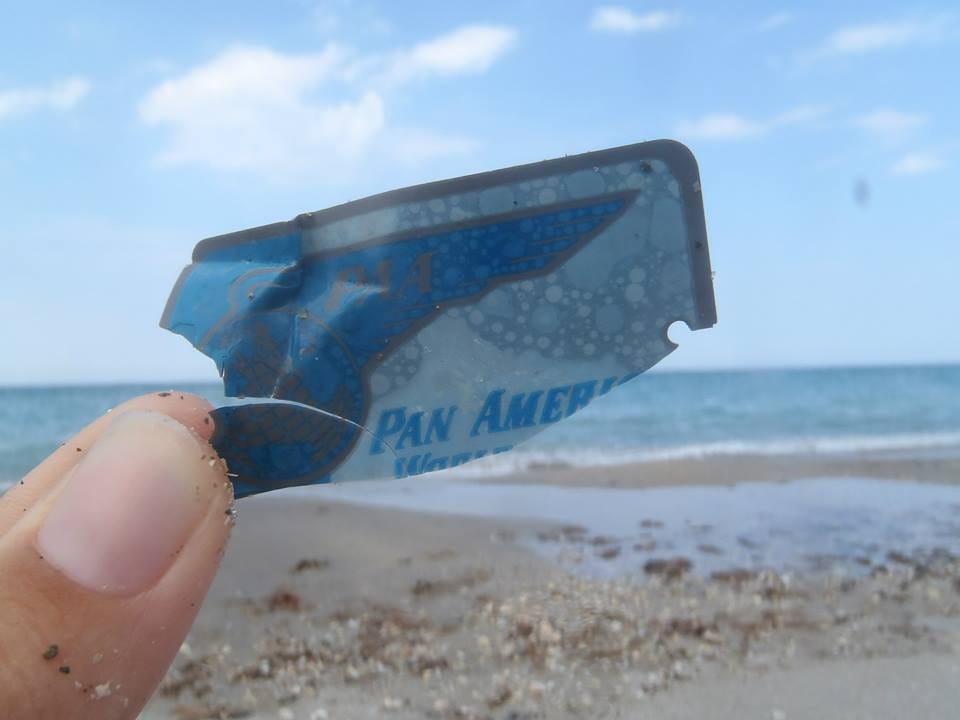
It turned out to be a luggage tag from Pan American Airways. But that was strange: Pan Am had gone bankrupt and ceased flying in 1991. Where could this tag have come from?
Balloons Blow member Tom Pitchford reached out to Doug Miller of the Pan Am Historical Foundation (PAHF), a non-profit group dedicated to preserving memories of the storied airline. A bit of research revealed that tags of this type had been used primarily in the 1950s. A crazy idea emerged: what if this tiny scrap of plastic had somehow floated 1,000 miles from Puerto Rico, where a Pan Am DC-4 airliner named the Clipper Endeavor had crashed in 1952?
Though now largely forgotten, the crash had had an oversized impact on aviation safety. After two engines lost power shortly after takeoff from San Juan, the captain had managed to set it down among the waves with no loss of life. But in the ensuing confusion, many passengers were unable to follow the flight attendants’ instructions, and 52 of the 69 passengers and crew aboard drowned as the plane slipped below the surface. It was because of that tragedy that pre-flight briefings are now standard practice around the world.
The PAHF put up an article about the discovery on its website, where it drew the attention of underwater explorer Russ Matthews. Fascinated, Russ began a twisting saga that, with luck and determination, resulted in the discovery of the Clipper Endeavor under 2,000 feet of water this past June.
Though the search for the Pan Am Clipper was different in many ways from the quest to find MH370 — one is 1,000 miles from the nearest port, one lay just offshore in much shallower water — there are also some uncanny echoe. Both required multiple search efforts, first with towed-array sonar and then using AUVs, and both involved the Dutch firm Fugro. If one proved successful, does that not suggest that perhaps the other can be, as well?
To learn more, I was fortunate to be able to speak with Matthews himself. In today’s episode, he tells me how he got swept up in an obsession to find the missing plane, and how exactly he went about doing it.