


The marine survey vessel Armada 86 05 has been back out at the 7th arc, resuming the search for MH370 that was paused last March. Things haven’t gone entirely smoothly. The ship did a couple days’ worth of scanning, had to go on standby for a couple of days due to bad weather before deploying its deep-scanning robot subs once more. We happen to know more about the details of the search than we usually do because lately the company doing the search, Ocean Infinity, has been been unusually communicative with the families of the missing passengers and crew.
In a message to family members of the missing on New Year’s Eve, Ocean Infinity reported the following:
Armada 86 05 has arrived at the search location at approximately 0400 hours on 31 December 2025.
Two Hugin AUVs were successfully deployed and are currently on mission surveying the southern sector of the search area.
The search area covered today 1655.66 km².
I think that figure is a typo; I think what they meant to say is that that’s the total area searched so far during the current renewed search, including this past March.
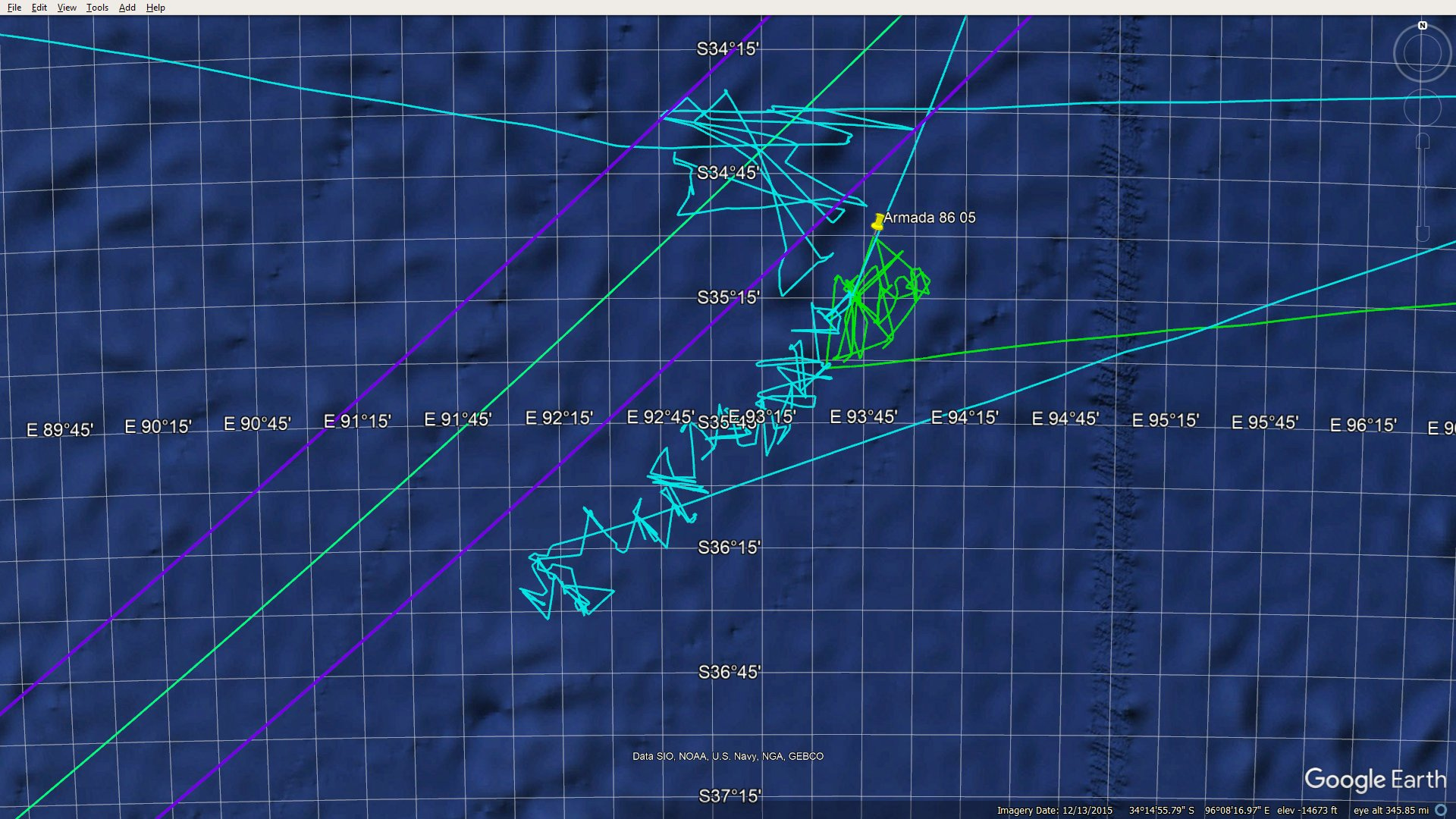
As I’ve discussed in earlier episodes of this podcast, it was widely expected that when Ocean Infinity picked up the seabed scan again, the would resume searching along a strip outside the 7th arc, continuing work that a sister ship had begun back in March. And that’s exactly what it did. In the image below, the blue track represents the area searched in March, and the green area is where the strip to the southeast is now being extended to the northeast:
On January 5 the Facebook group MH370 Families posted an update from Ocean Infinity that read:
Between 2 and 4 January 2026, search operations for MH370 continued aboard Armada 86 05 in the southern sector of the 7th arc, with sustained deployment of Autonomous Underwater Vehicles (AUVs) despite intermittent technical and weather-related challenges.
2 January 2026 (Day 3):
Mission 2 survey activities were concluded early in the morning. Two Hugin AUVs were successfully redeployed and continued executing planned survey missions under active vessel monitoring. A third Hugin AUV was launched but experienced a technical fault shortly after deployment. Fault-finding procedures were completed by the AUV team, and the vehicle was declared ready for redeployment when operational conditions allow.
3 January 2026 (Day 4):
Search operations progressed with two Hugin AUVs deployed and operating in accordance with mission plans. Vessel-to-AUV communications remained stable through routine system handshakes. Deployment of the third AUV was deferred due to unfavourable sea conditions, with redeployment planned once conditions improve.
4 January 2026 (Day 5):
Both deployed Hugin AUVs successfully completed their assigned missions and were safely recovered onboard Armada 86 05. While all three AUVs were confirmed to be technically ready for subsequent missions, persistent adverse sea conditions throughout the day prevented any further launches. Search operations were therefore temporarily paused and remain weather-dependent.
So obviously the work was proceeding at a suboptimal speed because one of the AUVs could not be deployed, and the bad weather in the area forced them to take a hiatus. Based on Marine Tracking data provided by Kevin Rupp, Armada 86 05 spent a couple of days cooling its jets, hanging out in a small area and waiting for the bad weather to pass.
But the week was not wasted. In the last three days of active searching the team managed to cover between 113 and 534 square kilometers per day, achieving a total search area of 2900 square kilometers searched during the current project.
Now the weather is improving. According to the weather forecast, the week ahead is looking just fine and dandy, with winds between 10 and 20 knots. According to Kevin Rupp’s latest reports, the ship is back to making the kind of movement patterns that we typically see when it’s deploying AUVs.
On to another topic: I wish I didn’t have to do this, but I feel like it’s necessary to address some misinformation that’s been circulating on the internet, there have been claims that the ship had stopped because it was deploying ROVs to take a closer look at something on the seabed.
I understand the desire to wish for the best but as we’ve just stated the reason for the ship holding tight as stated by Ocean Infinity itself is that it was waiting out bad weather. Also we know that the ship does not have ROVs on board, ill-informed claims to the contrary. As Don Thompson has taken great pains to point out the boxes seen on the deck of Armada 86 05 are not ROVs; they are refrigeration units that can store food for the crew.
Another thing I’d like to address is the claim that the seabed that they’re searching is incredible rugged and mountainous and if they don’t succeed it’s because this terrain is so complicated it’s virtually impossible to search. And that’s just not right.
Sure, there are some rugged areas within the broader search area, notably Broken Ridge and the Diamantina Trench. But it’s important to note that Ocean Infinity has searched here before, back in 2018, and didn’t report that they found the task in surmountable.
At any rate the current area is considerably flatter. There are a few low ridges here and there, one of which Victor singled out in his 2023 paper as deserving a second look, thinking that the wreckage could be hiding in a shadow there, but the area was looked at in March and it turned out there was nothing there.
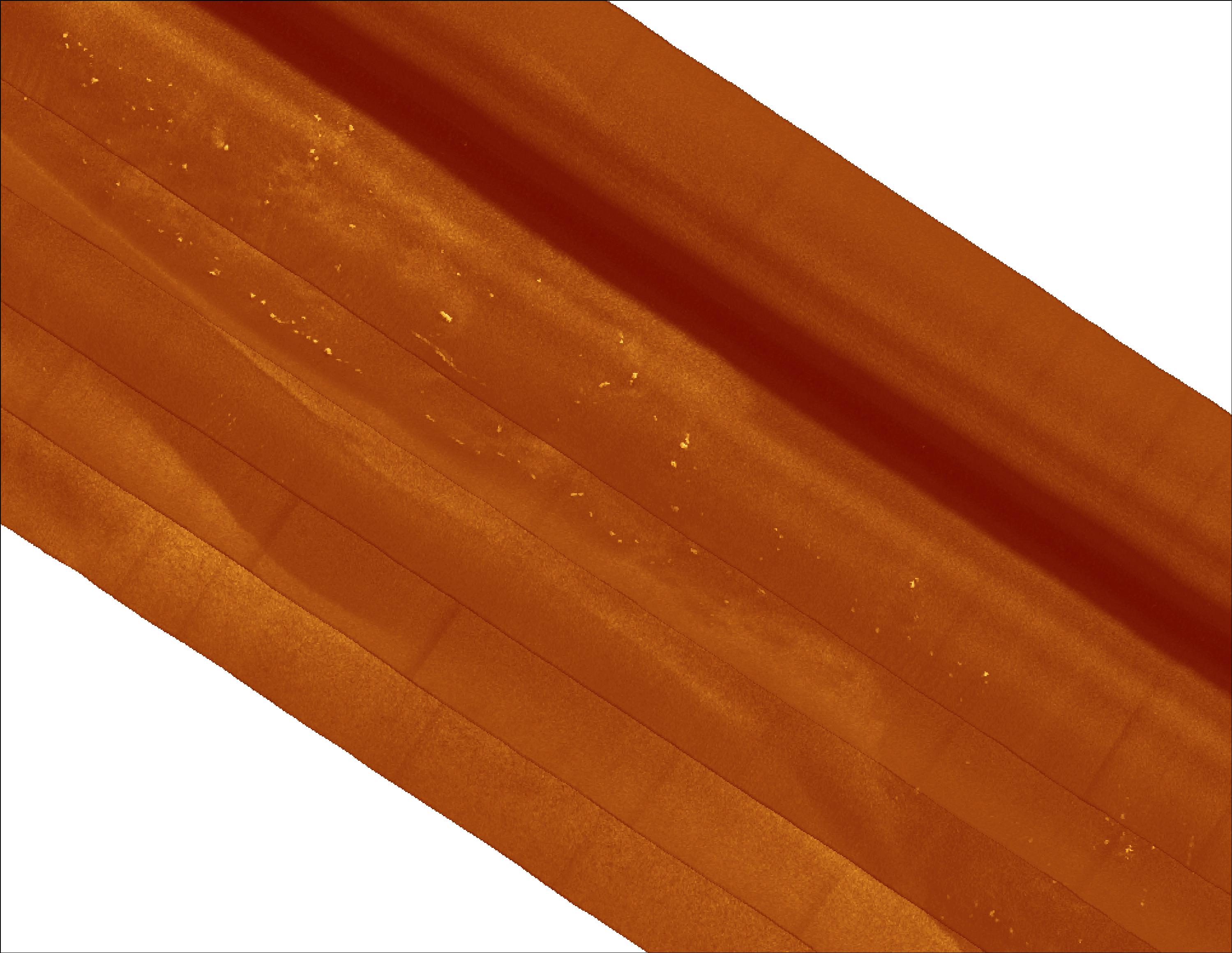
After the end of the 2017 seabed search the Australian government released images from the scan, some of which were taken near the current search area. They were easily able to see something on the seabed:
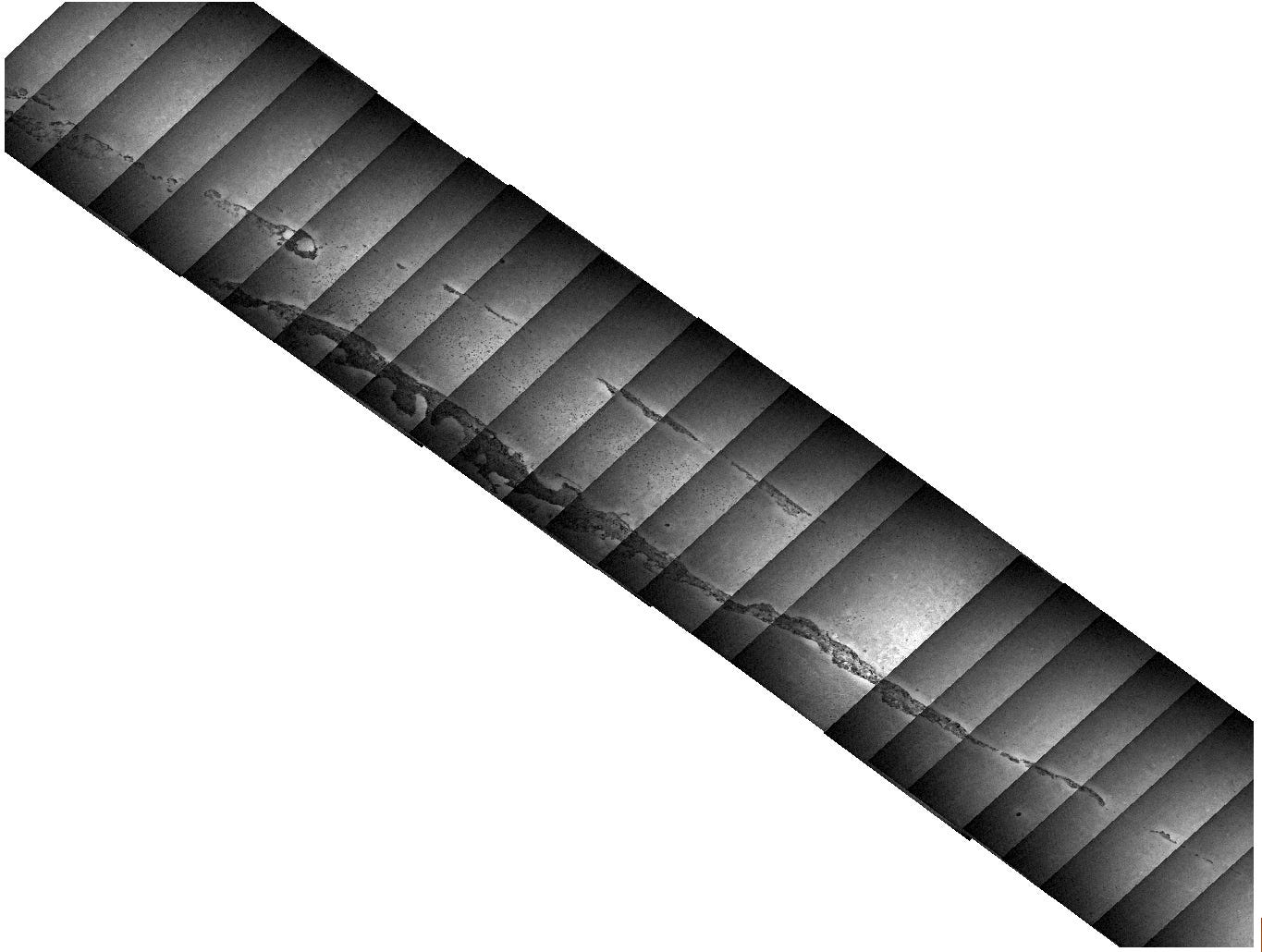
When they looked closer it turned out to be a geological formation:
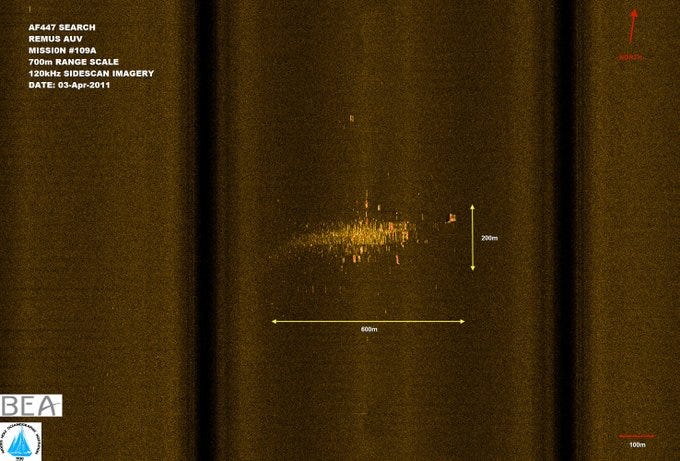
It’s interesting to compare what they saw there with the wreckage of the missing Air France jet, Air France 447, that was found on the seabed of the Atlantic after its disappearance in 2009.
These are pictures that Kevin Rupp posted recently. The first one shows the image returned from the side-scan sonar. As you can see it’s fairly low resolution but all the same it’s clear that there’s something there.
So investigators went back to take a closer look and this is what they saw in a higher resolution image. They could clearly make out distinct, identifiable fragments of the plane, especially large parts like the landing gear and engine cores.
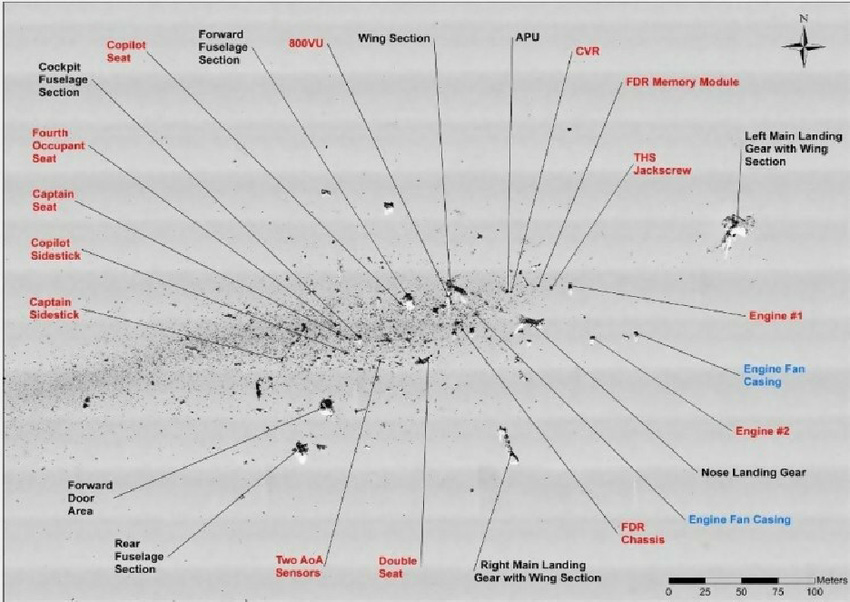
This particular crash was fairly low speed as far as these things go, we don’t really know how fast MH370 would have been going if it hit the water, so the pieces might be smaller, but regardless, there should still be an identifiable debris field.
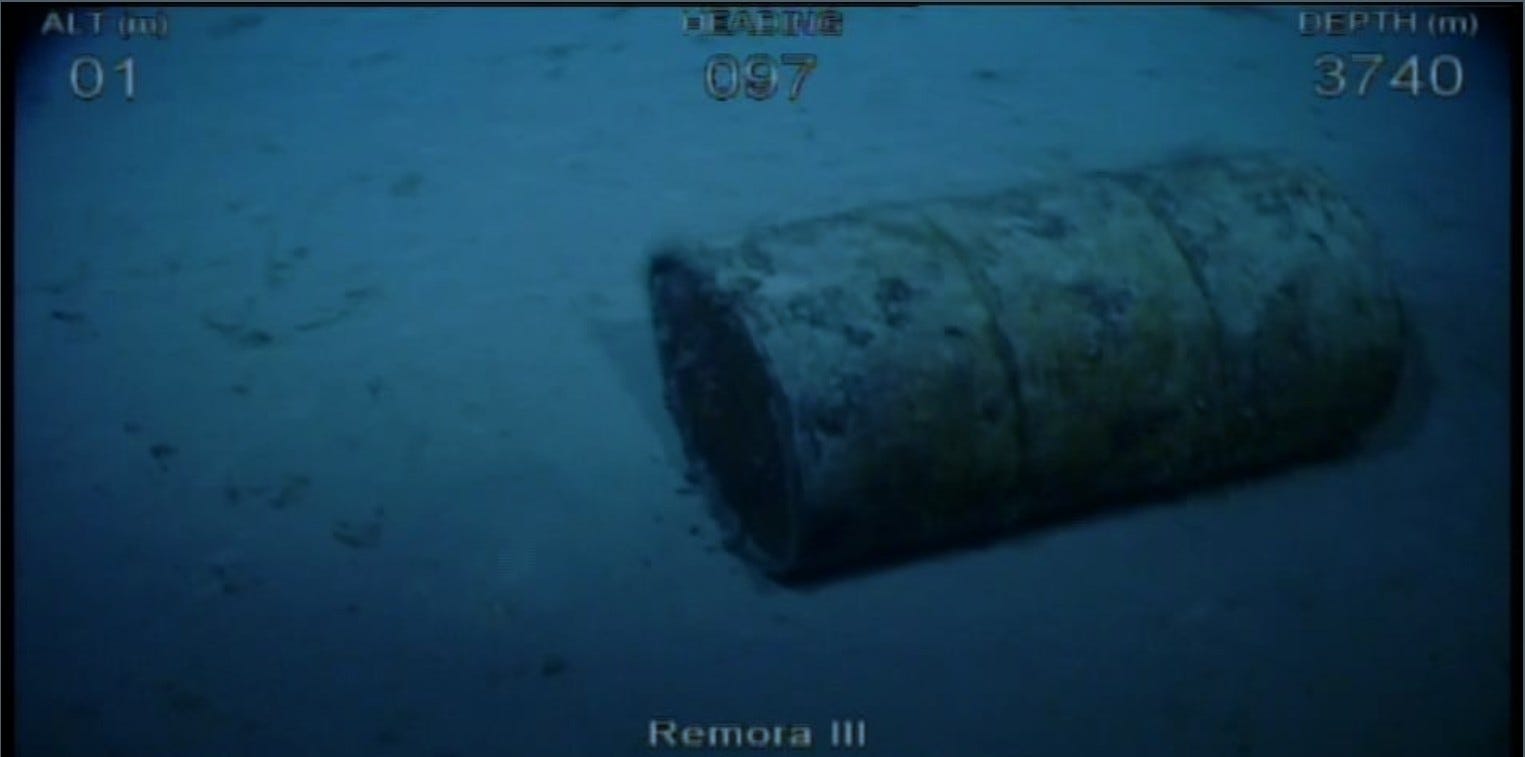
A question that I’ve gotten a lot is whether the sediment on the seabed is so thick that maybe the debris just sank into it, and so won’t be visible.
The answer is that no, it won’t sink in, and the reason that we can say that confidently is that in the course of earlier scans along the 7th arc in this vicinity, search crews have found smallish objects there were quite plainly just sitting atop the ocean floor, for example a steel drum:
So, to recap, the search is well underway, and after a brief hiatus the AUVs appear to be going back in the water. In the weeks ahead, I’ll be keeping a close eye on developments as they unfold, and will be back with you in short order to keep you apprised of how it is all going.