

Malaysia Announces Search Restart [S2Ep43 video]
The latest phase of the seabed scan for MH370 will start December 30

On Wednesday, December 3, 2025, and the Malaysia Government announced that the private underwater survey company Ocean Infinity will officially recommence the seabed search for MH370 in three weeks’ time. Today, we’re going to talk about why they’re doing it now, where they’ll look, and whether they’re likely to succeed.
To start, here’s the text of the announcement:
The Government of Malaysia wishes to update that the deep-sea search for missing wreckage of Malaysia Airlines Flight MH370 will be resuming on 30 December 2025.
Ocean Infinity has confirmed with the Government of Malaysia that it will recommence seabed search operations for a total of 55 days, to be conducted intermittently.
The search will be carried out in targeted area assessed to have the highest probability of locating the aircraft, in accordance with the service agreement entered between the Government of Malaysia and Ocean Infinity on 25 March 2025.
The latest development underscores the Government of Malaysia’s commitment in providing closure to the families affected by this tragedy.
You’ll remember that while the deal was indeed inked in March, after the first phase was already well underway, Malaysia actually announced the deal last December, basically a year ago, saying that they had reached an agreement with Ocean Infinity to restart the search which it had last conducted back in 2018.
This time the area was going to be just 15,000 square kilometers, considerably less than the 112,000 square kilometers the company had searched back in 2018.
That first phase of the search didn’t get underway until March, the ship Armada 78 06 went back to the 7th arc and scanned about 5000 square kilometers. They looked in an area that had already been scanned, to make sure the wreckage hadn’t been hiding in gaps in the original data, and then they looked at at area beyond the 7th arc that had never been scanned before, but that two French independent investigators had suggested would be a likely place to find it. But it wasn’t there.
Then in early April they put the search on hold again. Malaysia’s Transport Minister Anthonly Loke said at the time: “I think right now it’s not the season,” referring to the onset of winter in the Southern Hemisphere. He went on: “I think they (Ocean Infinity) have stopped the operation for the time being and will resume the search at the end of this year.”
The speculation was that they’d be back in November, turns out it will be a little later than that, December 30.
As we’ve noted in the last two episodes, the search vessel will probably be one of Ocean Infinity’s newest ships, Armada 86 05, a state of the art vessel that just launched a few months ago.
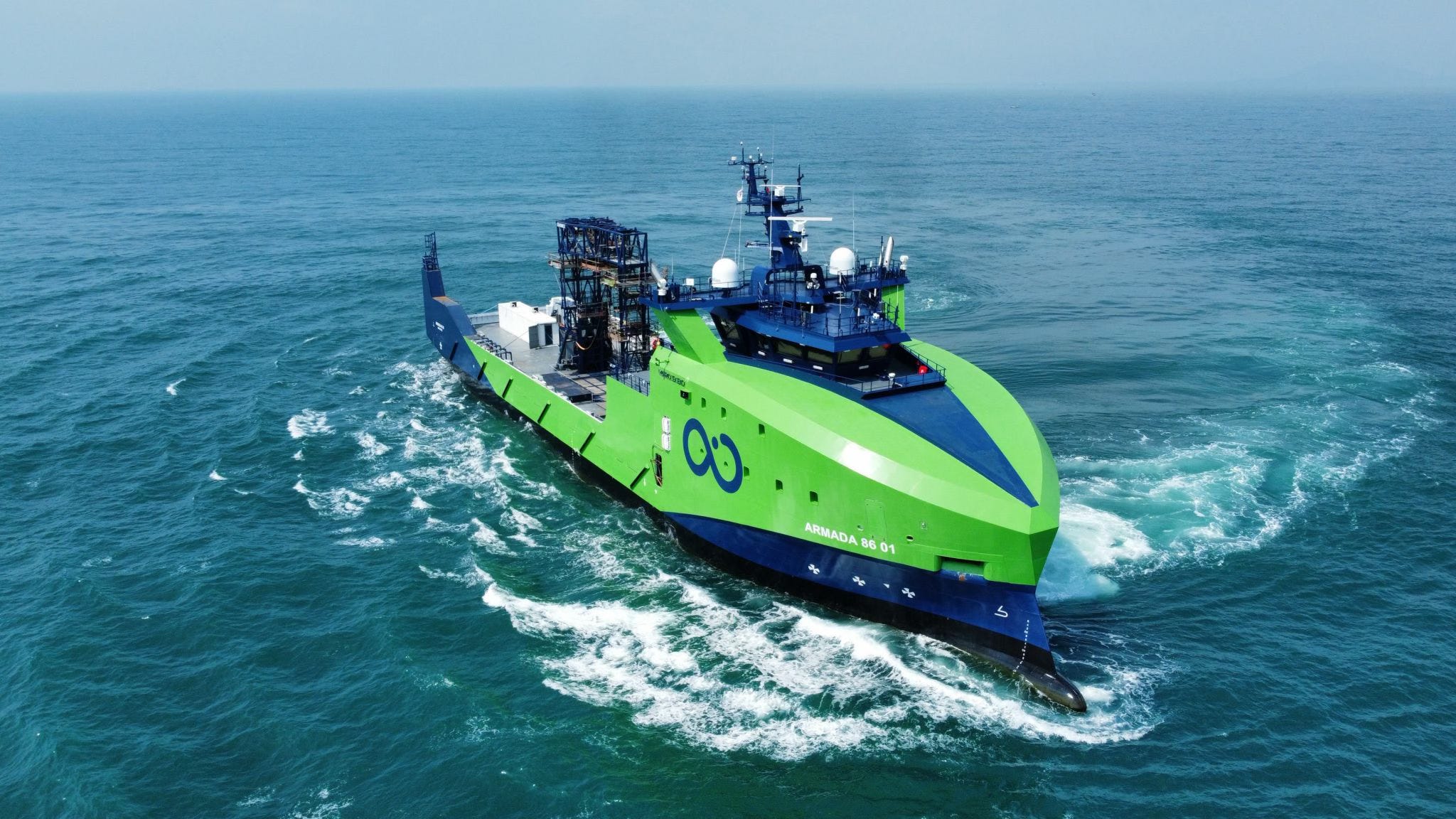
In the last few hours I’ve received an email from Kevin Rupp, who’s been keeping a close watch on Ocean Infinity’s search efforts, informing me that:
In just the last couple hours, Armada 86 05 has docked in Legazpi.
This means they are finished with the shipwreck survey for the Philippines and that they are reprovisioning.If they are provisioning, then we (Don and I) are unsure if the vessel will return to Singapore or head down to Fremantle.
Fremantle makes more sense to me but who knows what Ocean Infinity will decide.
So it very much sounds like the ship could soon be en route to the search area!
Malaysia hasn’t said where exactly the search will take place, but the wording of the announcement implies that it’s going to be a continuation of the plan that they did in the first phase, based on the same analysis. So once it gets there, it will most likely be continuing to work along the strip on the outer edge of the 7th arc that it had started working back in March. That’s an abyssal plain approximately three miles deep.
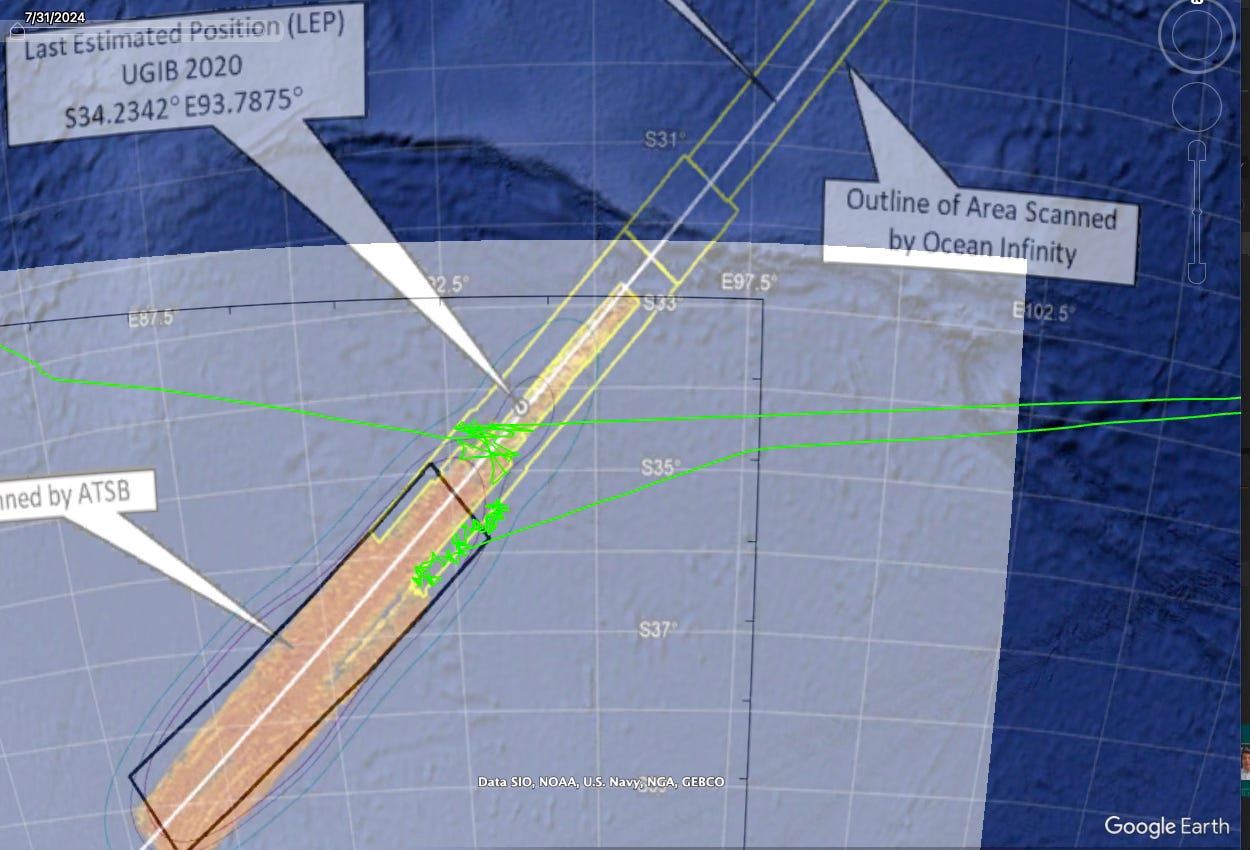
Once on station, it will deploy three Hugin AUVs, or autonomous underwater vehicles. These are robot subs that resemble bright orange torpedoes and can operate at depths of nearly four miles deep for up to three days at a stretch before being retrieved and recharged. Each AUV can cover about 42 square miles per day with its side-scan sonar. Given that rate of coverage, Armada 86 05’s three AUVs could in principal cover the remaining 4,000 square miles in about a month. But Ocean Infinity is a busy company with many marine survey projects around the world, so the ship might be needed elsewhere before it can complete the search.
If the search proceeds like that of Armada 78 06 in March, it will spend the better part of January searching about 5000 square kilometers before returning to port at Perth. Then it might simply go back to the search area, but Malaysia’s use of the word “intermittantly” implies there’s a high probability that it will go off and do paying work and then return when there’s a gap between gigs.
So that’s where we stand right now, vis-a-vis the search. Now I’d like to segue to a question that I’m getting asked a lot right now: What do I think the chances are that the search will be successful?
I pretty much answered that question in the last episode, but for those who haven’t seen it, let me put it this way.
The reason that investigators have been looking on the seabed in the first place is that after the plane disappeared from Malaysian radar, a piece of communications equipment that had been turned off was mysteriously turned back on again, and began transmitting signals that, because of a malfunction in the system, turned out to include hints as to where the plane had gone.
Australian government scientists used that data to calculate a probability map of where the plane’s wreckage most likely lay. They calculated that an area of 46,000 square miles had a 97 percent chance of containing the wreckage.
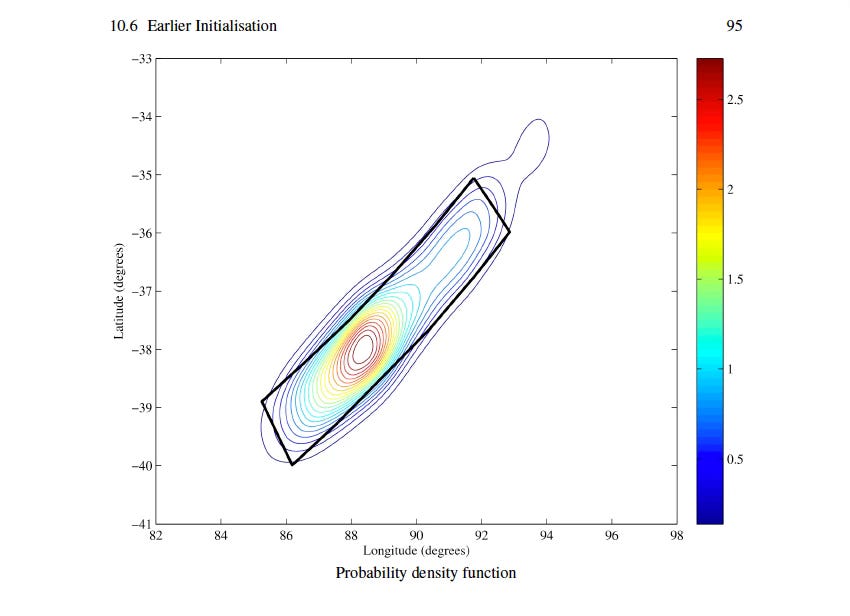
But they didn’t, nor did the additional 43,000 square miles that Ocean Infinity subsequently searched.
That absence implies that something really unusual happened. Signals sent to Inmarsat soon after the plane ran out of fuel indicates that the plane was in a near-vertical dive. The fact that the plane’s wreckage hasn’t been found in the vicinity implies that someone in the cockpit — presumably the captain, Zaharie Ahmed Shah — manually pulled the plane out of the dive and eased it into a glide that took it beyond the search area. But then, instead of easing the plane into the water Sully-style, crashed it violently into the ocean, based on the small size of interior cabin debris that later washed ashore in the western Indian Ocean.
It’s hard to imagine why Shah, or anyone else, would have wanted to behave in such a way. But if the search is unsuccessful, even stranger possibilities will have to be considered.
Apparently Armada 8605 is on its way. The voyage is timed to arrive at the 7th Arc on the 30th.
This news of the search being restarted is encouraging. Something I've pondered and have grown frustrated with for a while is why the Malaysian govt hasn't just paid OI per visit. Since it's a no find, no pay model, it's understandable that OI is treating this as a filler, side gig but the continued mental toll it takes on families has to be unimaginable.